
Antenna Installation with Bay Antenna & Cabling Service

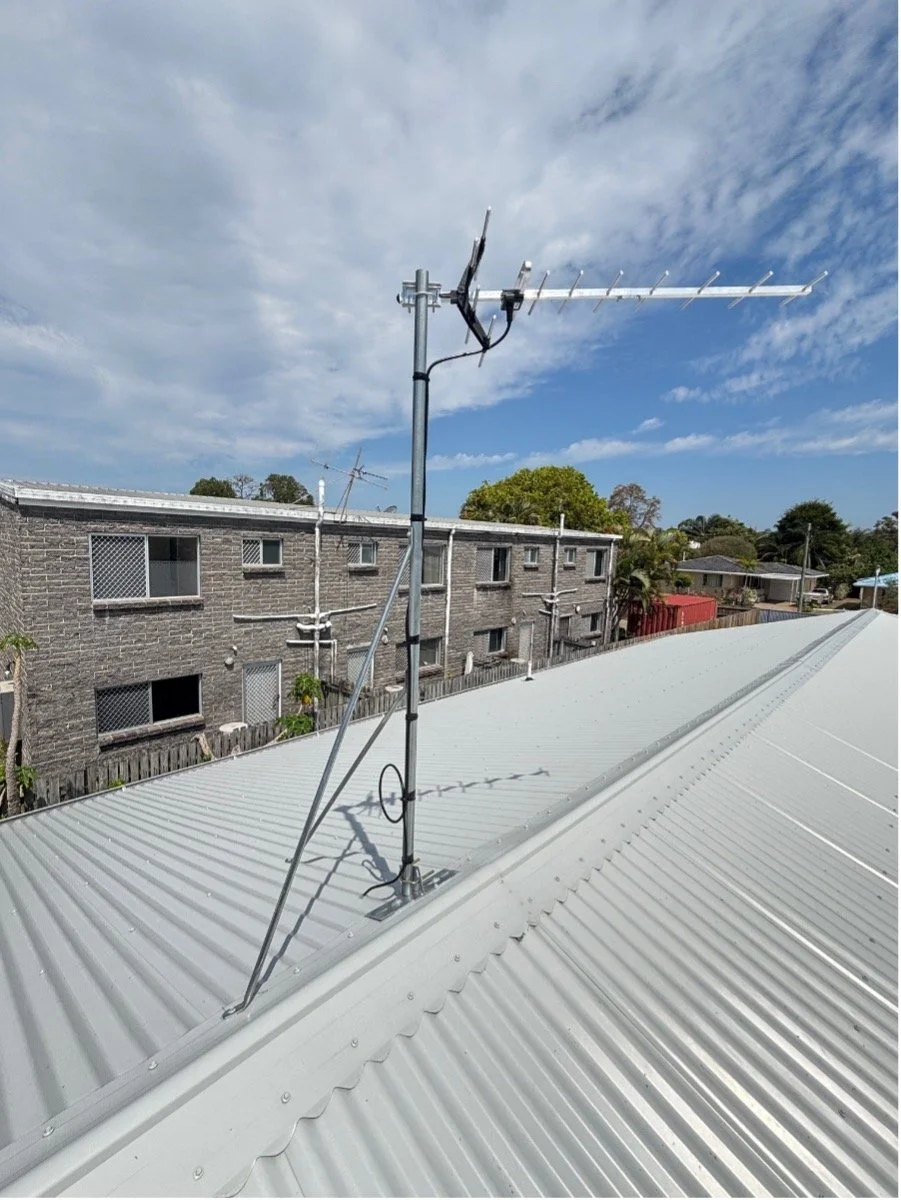
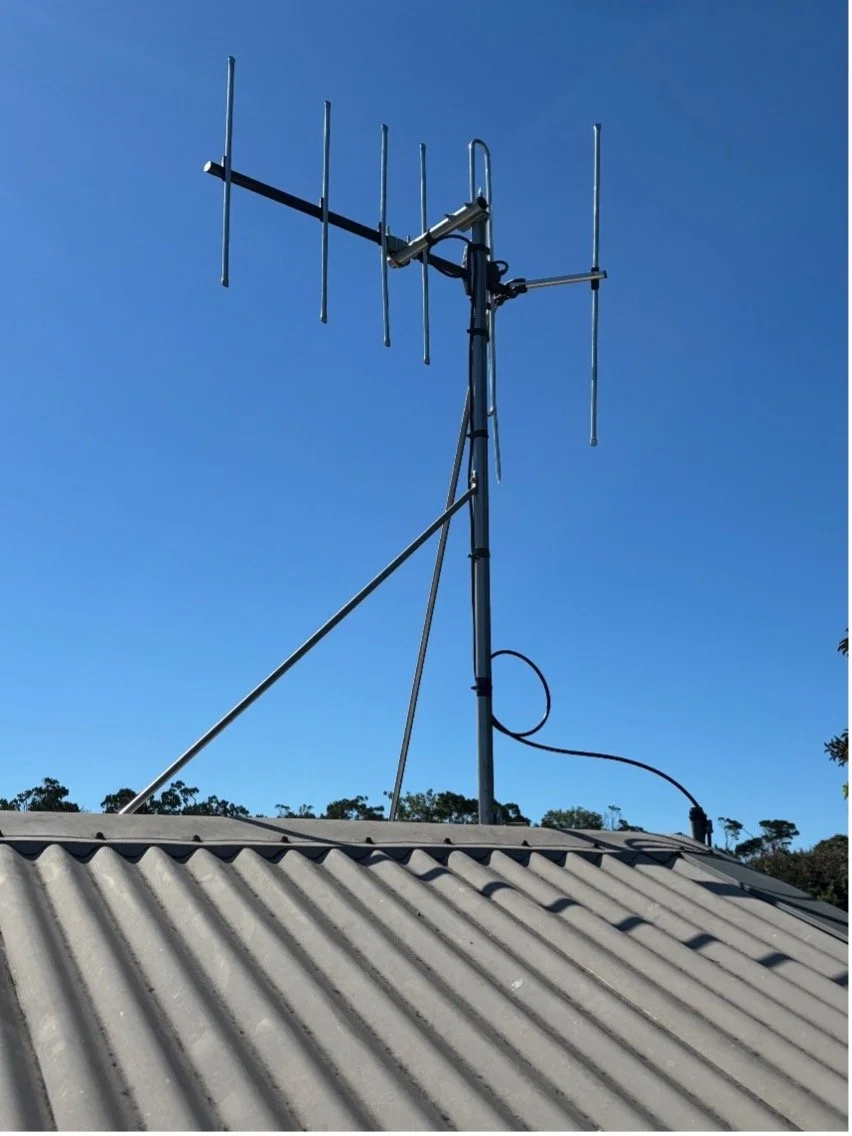
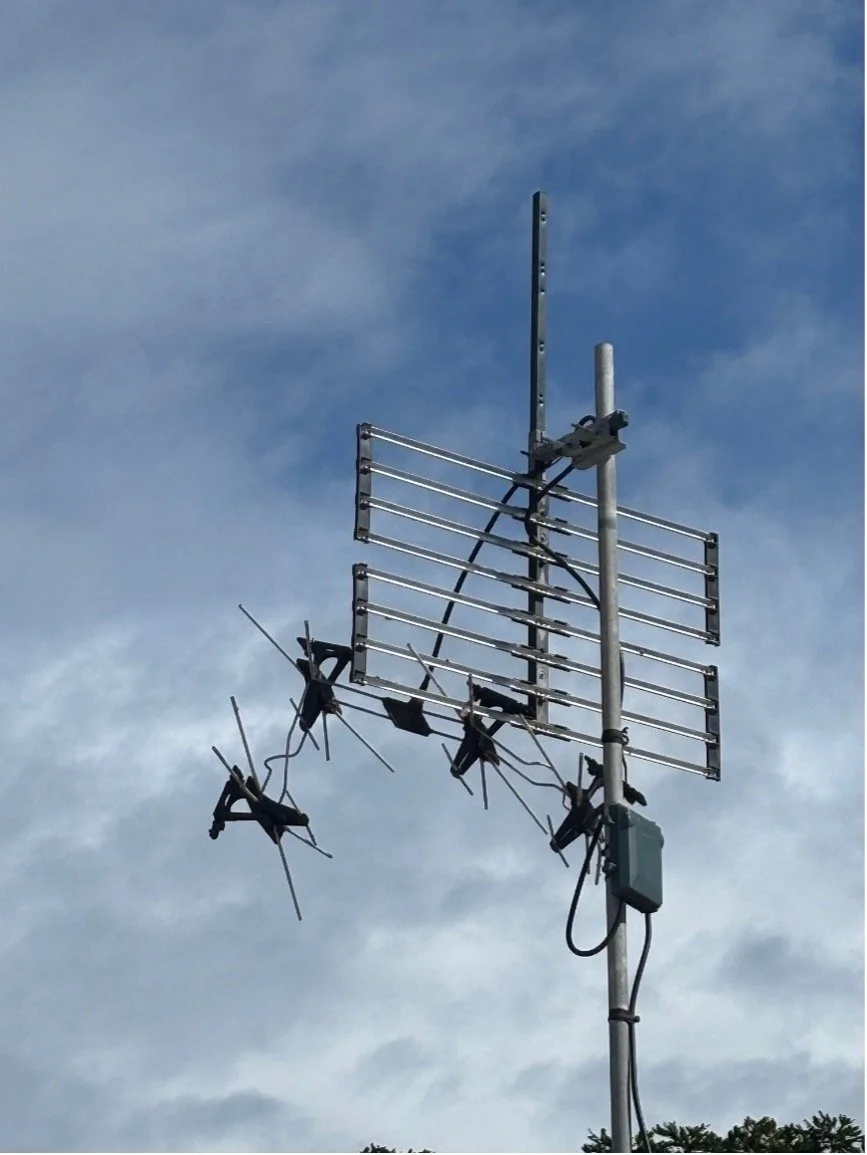
Getting clear, reliable TV reception today requires more than simply installing an antenna. Across Hervey Bay, Pialba, Urangan, Dundowran, River Heads, Toogoom and surrounding areas, reception conditions can vary significantly due to distance to transmitters, signal strength, terrain, vegetation, coastal conditions, and increasing 4G/5G interference.
At Bay Antenna & Cabling Services, we bring many years of local experience to every job. We understand which antennas work in specific areas and why. Antennas are not all the same — different designs, gains, and frequency responses are required for different signal environments. The wrong antenna choice can make reception worse, leading to ongoing pixelation, missing channels, or signal overload.
-
Free-to-air TV uses both VHF and UHF frequencies, and each behaves differently depending on location:
Strong signal areas (in-town locations) often require lower-gain or filtered UHF antennas to avoid signal overload and interference.
Weaker signal areas (out of town, semi-rural and fringe locations) benefit from higher-gain directional VHF antennas designed to capture distant signals.
Some locations perform best with combined VHF/UHF antennas, while others require a more targeted solution.
When we arrive onsite, we assess signal levels with our Terrestrial DTV Signal Meter and select an antenna that suits your exact location. It is not a one-size-fits-all approach.
-
Many TV reception problems are caused by physical obstacles and electrical interference, not the antenna itself. Common issues we see locally include:
Trees and dense vegetation absorbing or reflecting TV signals
Large buildings and sheds blocking or bouncing signals
Hills, valleys, and uneven terrain affecting signal paths
Electric fences, motors, and electrical equipment creating noise and interference
Changing conditions due to wind, growth of trees, or new buildings nearby
This is why antenna height, mounting position, and direction are critical. Simply replacing an antenna without understanding these factors often doesn’t solve the problem. We take all of this into account when deciding on your installation.
-
Managing 4G & 5G Mobile Interference and analogue.
With the rollout of 4G and 5G mobile networks since analogue has finished, interference has become a common cause of TV reception faults. These signals can overpower TV frequencies, resulting in:
Pixelation and freezing
Sudden loss of channels
Reception that changes throughout the day
Old TV that was analogue are no good and we have to put Digital TV antenna on the roof.
We counter this by installing quality antennas with built-in filtering, and where required, dedicated 4G/5G filters and correctly matched amplifiers, ensuring only the correct TV signals are amplified.
-
A reliable antenna system is only as good as its components. We use quality, proven materials throughout every installation, including:
Heavy Duty Antennas suited to local VHF and UHF coastal conditions
Low-loss, UV-stable coaxial cabling
Weatherproof fittings and quality connectors
Galvanised or stainless-steel roof mounting hardware
Correctly rated masts, brackets, and fixings for coastal environments
Properly matched signal amplifiers and splitters where required
Cheap cabling, fittings, or incorrectly installed amplifiers often lead to signal loss, corrosion, and repeat issues — especially in coastal areas like Hervey Bay.
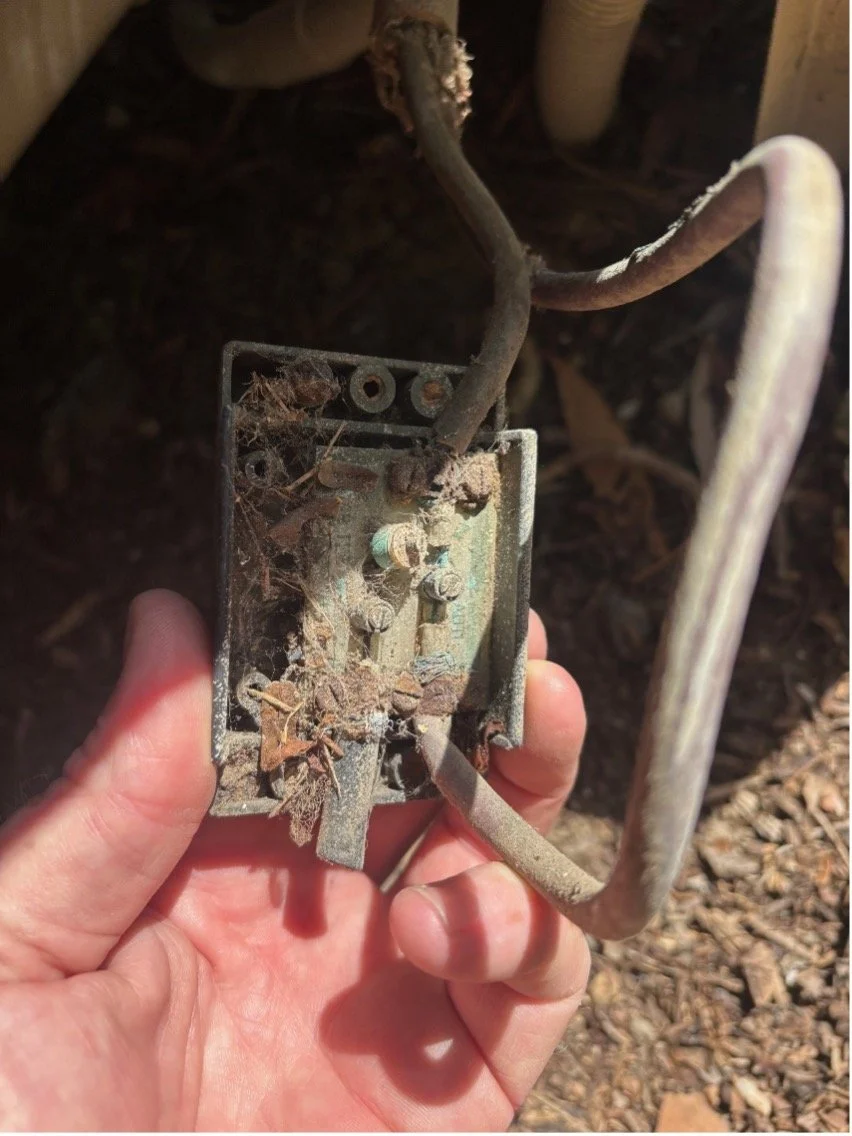
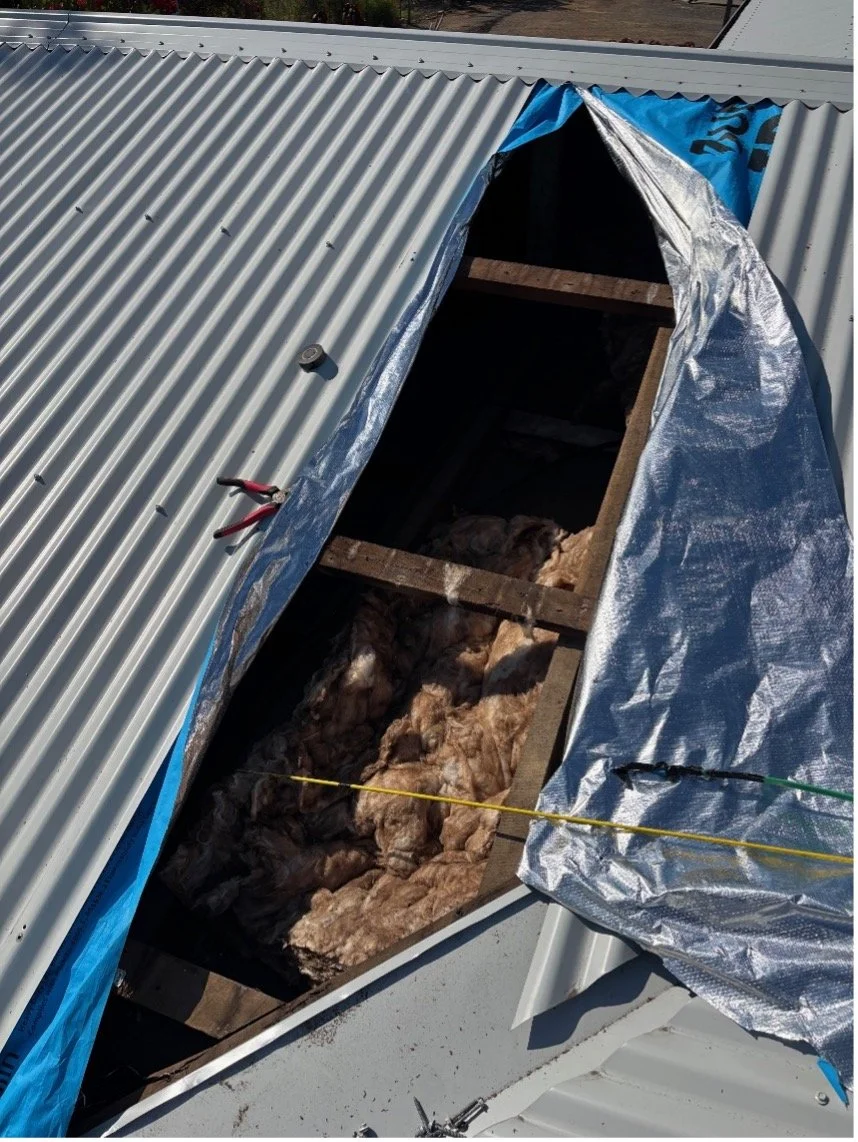
Professional installation, done properly.
Every installation is carried out with long-term reliability in mind:
Correct antenna selection and positioning
Secure roof mounting designed to withstand local conditions
Proper securing of cables and weather sealing
Signal testing and fine tuning at the TV outlet
Balancing signals for multiple TVs
Repairing or upgrading older or poorly installed systems
Tuning in your TV once installed.
Local knowledge you can rely on
As a local Hervey Bay business, we understand the unique reception challenges of our region. If your TV breaks up in bad weather, drops channels, or never seems consistent, it’s usually not the TV — it’s the antenna system and how it’s installed or operating.